Germany is well known for having tall people. Many visitors wonder how tall Germans really are and why height is so high in this country. This guide explains The Complete Guide to the Average Height in Germany in a simple and clear way.
I wanted easy answers too. So this article covers real numbers, history, and reasons behind the average height in Germany, without confusing terms or unnecessary details.
Key Takeaways
Germany is among the tallest countries in the world. Both men and women are taller than the global average due to strong healthcare, good nutrition, and active lifestyles.
Over the last century, German people grew much taller. Today, growth has slowed, but Germany still keeps a strong position in global height rankings.
What is the Average Height in Germany?
The average height in Germany shows how tall people are overall. Current data places Germany above the world average for both men and women.
When you explore the average height in Germany, you also notice regional differences. Northern regions are slightly taller than southern ones, mainly due to genetics and diet patterns.
What is the average height for men in Germany?
The average height for men in Germany is about 180 cm or 5 feet 11 inches. This makes German men taller than most men worldwide.
If you compare German male height with other countries, Germany ranks near the top. Strong healthcare, nutrition, and lifestyle habits support this above-average height.
What is the average height for women in Germany?
The average height for women in Germany is around 166 cm or 5 feet 5 inches. This is also higher than the global female average.
When you review German female height, similar factors appear. Good nutrition, healthcare access, and healthy living conditions help women reach their natural height potential.
How Has German Height Changed Over Time?
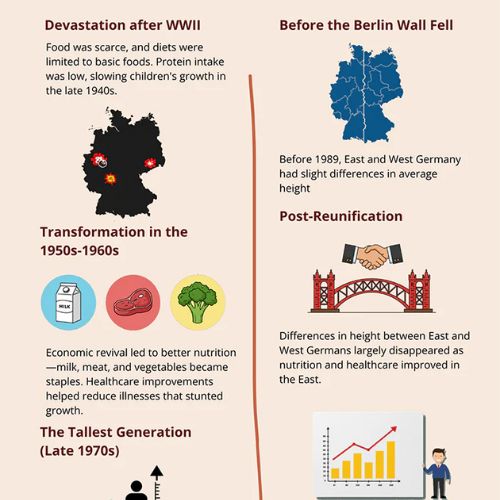
German height changes over time show steady growth since the early 1900s. Each generation became taller as living conditions improved.
Experts call this the secular height trend. Better food, medical care, and fewer childhood illnesses allowed children to grow taller than past generations.
Post-war recovery and growth boom
After World War II, food shortages slowed growth. Many children lacked protein, which affected height during those difficult years.
During the 1950s and 1960s, economic recovery improved diets and healthcare. This period created the tallest German generations in history.
The fall of the Berlin Wall
Before reunification, East Germans were shorter than West Germans. Poorer diets and limited healthcare caused this difference.
After 1989, living standards improved in the East. Within one generation, the height gap closed, proving the environment strongly affects average German height.
How Does Germany’s Average Height Compare to Other Countries?
Germany ranks high globally but stays slightly behind northern Europe. When checking Germany’s height ranking, the Netherlands and Denmark lead.
Compared to countries like the United States and Japan, Germans are clearly taller. These differences reflect long-term nutrition, healthcare, and lifestyle habits.
Factors Influencing Height in Germany
Several elements shape factors influencing height in Germany. Height depends on genetics, diet, physical activity, and healthcare from early life.
These factors work together. When one improves, it supports the others, helping Germans maintain above-average height levels.
Genetics
Genetics and height influence how tall someone can grow. Northern Germany shows taller averages due to historical Scandinavian ancestry.
Still, genes need support. Without good food and healthcare, genetic height potential may not fully develop.
Nutrition
Nutrition plays a major role in growth. A protein-rich diet with dairy, fish, and lean meat supports strong bones and muscles.
Calcium and vitamin D help bone growth. Studies show people with balanced diets often grow taller than those with nutrient gaps.
Physical activity and sports
Physical activity supports healthy growth. In Germany, children often join sports clubs from a young age.
Sports like swimming and athletics strengthen bones and posture. This active culture supports physical activity and height development naturally.
Healthcare and medical support
Germany’s healthcare system tracks children’s growth through regular checkups. Problems are found early and treated quickly.
When needed, growth hormone therapy helps children with medical growth conditions, ensuring fair growth opportunities.
In conclusion,
Germany’s height success comes from long-term progress. The Complete Guide to the Average Height in Germany shows how genetics, nutrition, activity, and healthcare work together. Although growth has slowed, Germany remains one of the tallest nations. Strong systems continue supporting healthy growth for future generations.
FAQs
Is 180 cm short in Germany?
No. 180 cm is the average height for men in Germany and is considered normal.
Is 5’8” tall in Germany?
For women, yes. For men, it is slightly below the national average.
What country has the tallest men?
The Netherlands has the tallest men, averaging over 183 cm.
Who are the tallest Europeans?
Northern Europeans lead, including the Netherlands, Denmark, and Germany.
Is 6ft short in the Netherlands?
No, but it is slightly below the Dutch male average height.