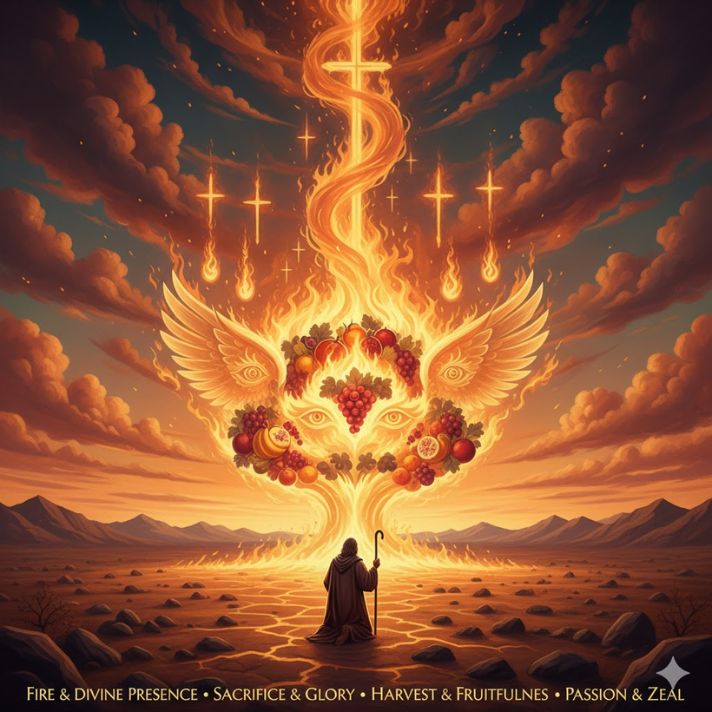
The color orange is full of life, warmth, and energy, and it carries deep meaning in the Bible. Even though the word “orange” doesn’t appear in the original biblical texts, the color itself is present in many images, like fire, sunsets, and glowing metals. These orange tones often symbolize God’s presence, divine energy, and the strength to endure challenges.
In Scripture, orange is closely connected to fire, which is not only a symbol of heat but also of holiness. From the burning bush in Exodus to the tongues of fire at Pentecost, this color represents God’s communication, guidance, and purification. It is a color of transformation, showing how God tests, refines, and strengthens His people.
Orange also stands between red and yellow, symbolizing the space between sacrifice and joy, struggle and reward. It reflects endurance, hope, and spiritual growth, much like the ripened harvest in autumn. Through these symbols, the color orange communicates important lessons about faith, perseverance, and the closeness of God in everyday life.
Is Orange Mentioned in the Bible?
The word “orange” never appears in the Bible’s original Hebrew, Aramaic, or Greek texts. Ancient languages had fewer words for colors and often grouped many shades under broader terms like red or yellow. Even though the name “orange” was not used, the color itself appears throughout Scripture in images like glowing fire, sunsets, and precious stones. These visual hints show that orange was present and meaningful long before the word existed.
Biblical writers and artists often described vivid scenes that included orange hues, even without naming them. For example, blazing sunsets or the fiery glow of God’s presence suggest this color in a symbolic way. Linguistic studies show that many languages only developed a word for orange much later, but in the Bible, the essence of orange was already alive in the imagination of its people. It was a color that symbolized energy, warmth, and divine power, even if it remained unnamed.
Symbolism of Orange in Biblical Contexts
Fire and Divine Presence
In the Bible, orange is closely linked to fire, which often represents God’s presence. The burning bush in Exodus 3:2 shows fire that speaks and guides, not destroys. At Pentecost (Acts 2:3), the Holy Spirit came “like tongues of fire,” filling the apostles with courage and faith. These fiery images are often imagined in shades of orange and gold, showing warmth, energy, and the closeness of God.
Purification and Judgment
Orange also symbolizes purification and transformation. In Malachi 3:2–3, God is described as a “refiner’s fire,” testing and purifying His people like metal in a furnace. This is not punishment but a process of growth and holiness. The glowing orange fire reminds believers that God’s testing strengthens faith, removes impurities, and prepares the faithful for His presence.
Transition and Endurance
The color orange sits between red and yellow, representing the journey between sacrifice and joy, struggle and reward. Romans 5:3–4 explains that suffering produces endurance, which then builds character and hope. Orange, like the ripened harvest in autumn, symbolizes endurance, growth, and the rewards of faithful living. It is a color of balance, showing the spiritual path from trial to fulfillment.
Color Symbolism in Jewish and Early Christian Traditions
Tabernacle and Temple Colors
In the Bible, the tabernacle and temple were filled with rich colors that carried deep meaning. Exodus 26:1 mentions blue, purple, and scarlet as important colors, while orange isn’t named directly. However, it appears in the bronze of the altar, the glow of oil lamps, and the perpetual flame. These orange tones symbolized cleansing, repentance, and the seriousness of worship, showing God’s presence in the sacred space.
Early Church Interpretations
The early Church Fathers didn’t specifically mention orange, but they often wrote about fire as a symbol of God’s teaching and purification. Origen described fire as God’s way of instructing people, while Gregory of Nyssa saw divine fire as purifying, not punishing. Augustine explained God as a light that illuminates the soul without causing harm. In their writings, orange hues are implied through the imagery of fire, warmth, and divine presence, highlighting God’s closeness and guidance.
Gemstones, Metals, and Fiery Imagery
Orange appears in biblical gemstones and metals as well. Revelation 21:19–20 describes fiery stones like jacinth, chrysolite, and carnelian, while Exodus 28:17–20 shows them on the High Priest’s breastplate. Bronze, when heated, glows orange and is used to describe altars and angelic beings. These colors symbolize strength, holiness, divine judgment, and spiritual authority, reinforcing the importance of orange in both Jewish and early Christian traditions.
Gemstones, Metals, and Fiery Imagery
Fiery Gemstones in Scripture
The Bible often uses gemstones to convey spiritual meaning, many of which show orange hues. Revelation 21:19–20 describes stones like jacinth, chrysolite, and carnelian, which glow with red-orange or golden shades. These gems were not just decorative; they symbolized value, spiritual authority, and God’s eternal city. In Exodus 28:17–20, similar stones appeared on the High Priest’s breastplate, each representing a tribe of Israel and showing the importance of holiness and divine order.
Bronze and Burnished Metal
Orange is also reflected in metals like bronze, which glows when heated. The Bible uses this imagery to describe strength, divine presence, and judgment. For example, Daniel 10:6 mentions “arms and legs like burnished bronze,” and Revelation 1:15 describes “feet like bronze glowing in a furnace.” Bronze altars and weapons symbolized seriousness, endurance, and God’s power, making orange a visual cue of holiness, stability, and divine authority.
Spiritual Meaning of Fiery Imagery
Together, gemstones and glowing metals highlight the spiritual significance of orange. They show God’s presence, the refining process of faith, and the enduring strength of the faithful. Through these fiery images, Scripture communicates that divine power is not just seen but felt—warm, radiant, and transforming.
Modern Christian Reflections on Orange
Spiritual Endurance
Today, many Christian writers and artists use orange to symbolize spiritual endurance and faith that remains strong under trials. Just as fire refines metal, God’s presence tests and strengthens believers. Hebrews 12:29 says, “our God is a consuming fire,” which shows that divine fire removes what cannot endure and refines what remains. Orange reflects this process, reminding Christians that challenges build faith, courage, and perseverance.
The Holy Spirit and Revival
Orange is also associated with the warmth and energy of the Holy Spirit. During the Azusa Street Revival (1906–1915), witnesses described spiritual experiences in terms of fire and light. Charismatic and Pentecostal traditions often depict the Spirit as flame-like, alive, and powerful. Though not tied to a single color, orange naturally captures this energy, symbolizing inspiration, revival, and unstoppable divine movement.
Psychological and Cultural Meaning
Modern color psychology shows that orange inspires energy, action, and alertness without creating chaos. In a spiritual context, it mirrors active faith—forward-moving and enduring rather than stagnant. Even across cultures, orange often represents serious spiritual focus, like the robes of Hindu and Buddhist monks. For Christians, it visually expresses devotion, intensity, and the life-giving power of God’s presence.
Orange as Energy and Motivation
Modern psychology sees orange as a color that inspires energy, alertness, and action without creating stress or chaos. Spiritually, it mirrors the Bible’s depiction of fire as activating and life-giving. Orange reminds believers that faith is meant to move forward, grow, and endure trials with courage and strength.
Cross-Cultural Spiritual Significance
Orange has spiritual meaning beyond Christianity. In Hinduism and Buddhism, monks wear orange robes to symbolize renunciation, devotion, and intense spiritual focus. While Christianity does not adopt these traditions directly, the color’s universal connection to sacred energy shows that orange naturally communicates holiness, transformation, and spiritual intensity.
Symbol of Enduring Faith
In both scripture and culture, orange represents momentum in faith, perseverance, and spiritual growth. It is the color of divine energy that inspires action, encourages endurance, and reflects a living, vibrant faith. Just as fiery imagery in the Bible signals God’s presence, orange today conveys the warmth, strength, and life of a faithful heart.
Conclusion
Though the word “orange” does not appear in the Bible, its presence is felt through fire, glowing metals, sunsets, and gemstones. Orange symbolizes God’s presence, divine energy, purification, and spiritual endurance. It represents the journey between struggle and reward, sacrifice and joy, showing how faith grows through testing and perseverance.
From the burning bush to Pentecost, from bronze altars to fiery gemstones, orange communicates transformation, courage, and holiness. Across cultures and modern reflections, it remains a color of energy, devotion, and spiritual momentum. Understanding orange in the Bible helps believers see God’s nearness, guidance, and refining power in everyday life.
FAQ’S
What does the color orange symbolize in the Bible?
Orange symbolizes God’s presence, divine energy, fire, purification, endurance, and spiritual growth. It reflects transformation, courage, and the journey from struggle to reward.
Is the word “orange” mentioned in the Bible?
No, the word “orange” does not appear in the original texts. However, orange hues are implied in fire, sunsets, gemstones, and glowing metals.
How is orange connected to fire and purification?
Orange often represents holy fire that refines and strengthens faith, as seen in the burning bush, Pentecost, and the refiner’s fire imagery in Scripture.
What is the significance of orange in gemstones and metals?
Fiery gemstones and glowing bronze symbolize divine authority, holiness, strength, and spiritual endurance, visually conveying God’s presence and the refining process of faith.
How does orange relate to modern Christian spirituality?
Orange reflects spiritual endurance, active faith, and energy. It symbolizes the Holy Spirit, revival, courage, and the strength to persevere through trials and growth.