This GUIDE Mt. Fuji Climbing Guide is written for visitors who want clear answers before climbing Japan’s most famous mountain. It explains what to expect, how to prepare, and how to stay safe.
Mt. Fuji is not just a mountain. It is a cultural symbol and a real physical challenge. With good planning and the right choices, many first-time hikers reach the summit safely.
How to climb Mt. Fuji, Japan’s most famous peak
Mt. Fuji is Japan’s highest mountain at 3,776 meters. Every year, people from around the world come to experience this famous climb.
Even though many beginners climb Mt. Fuji, it is not an easy walk. High altitude, loose volcanic ash, and cold weather make preparation very important.
New Mt. Fuji Regulations (2025)
New rules started in 2025 to control crowds and improve safety. The Mt. Fuji climbing season is only from early July to early September.
All climbers must pay a mandatory hiking fee of 4,000 yen. Entry at night requires mountain hut reservations, so always check the official Mt. Fuji Climbing website.
The Mt. Fuji Climbing Trails
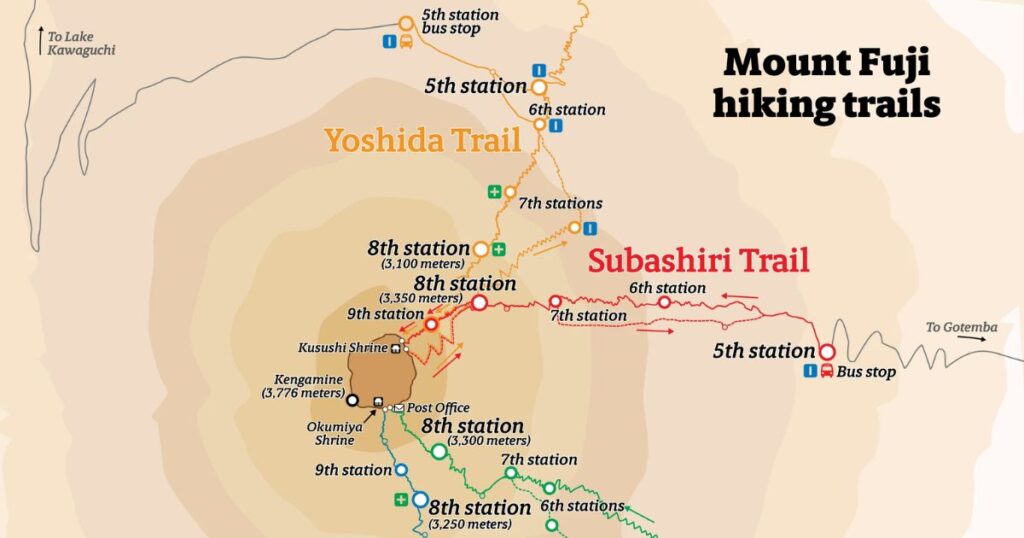
There are four official Mt. Fuji trails, each starting at a different 5th Station. Every trail has a different level of difficulty and crowd size.
Choosing the right trail helps reduce stress and risk. Beginners usually pick routes with better facilities and clearer paths.
Yoshida Trail
The Yoshida Trail is the most popular route. It has many huts, clear signs, and separate paths for going up and down.
This trail is best for first-time hikers and people planning a sunrise hike. It can be crowded during peak season.
Fujinomiya Trail
The Fujinomiya Trail is the shortest way to the summit. It is also the steepest and more tiring.
Because the same path is used for climbing and descending, traffic can be heavy. This trail suits confident hikers.
Subashiri Trail
The Subashiri Trail is quieter and less crowded. The lower part passes through forest areas, offering some protection from wind.
Near the top, it joins the Yoshida Trail. Many hikers choose it for a calmer experience.
Gotemba Trail
The Gotemba Trail is the longest route and has fewer facilities. It starts at a lower height, making the climb harder.
This trail is best for experienced climbers who want fewer people and a tougher challenge.
Climbing Mt. Fuji FAQs
These answers help visitors understand timing, safety, gear, and planning before attempting the climb.
When is the best time of year to climb Mt. Fuji?
The best time is during the official Mt. Fuji climbing season, from early July to early September.
Late July and August are the busiest months. Trails are very crowded during Japanese holidays like Obon.
When is the best time of day to climb Mt. Fuji?
Most hikers choose a two-day climb. They sleep in a hut and continue early in the morning.
This timing helps the body adjust to altitude and allows hikers to reach the summit for sunrise.
What is the weather like on Mt. Fuji?
Mt. Fuji weather changes fast. Rain, strong wind, and thunderstorms on Mt. Fuji often happens in the afternoon.
Even in summer, the summit is cold. Wearing layers and warm clothing is necessary.
How to plan for a Mt. Fuji hike?
Planning early is very important. Mountain hut reservations sell out quickly during busy months.
High altitude can cause dizziness and headaches. Walking slowly, drinking water, and resting often helps reduce problems.
Do I need a special permit to climb Mt. Fuji?
No climbing permit is needed. However, the mandatory hiking fee must be paid.
Some trails may need advance booking during busy times. Always confirm rules online before traveling.
What should I bring to climb Mt. Fuji?
Wear strong hiking boots and bring warm layers, rain gear, and gloves. A headlamp is needed for early climbing.
Carry food, cash, and at least two liters of water. Weather can change suddenly.
What on-site facilities are there on Mt. Fuji?
Mountain huts sell drinks, food, and basic supplies. Some huts allow overnight stays.
There is no running water. Restrooms are basic and require payment.
Where to stay near Mt. Fuji?
Lake Kawaguchiko is a popular place to stay before climbing. It offers hotels and easy access to trails.
The Fuji Five Lakes area also has hot springs, which are great for relaxing after the hike.
How to get to Mt. Fuji?
From Tokyo, seasonal buses go directly to the Yoshida Trail 5th Station.
Trains go to Kawaguchiko Station for Yoshida Trail access or Shin-Fuji Station for Shizuoka routes.
Do I need a guide to climb Mt. Fuji?
A guide is not required. Trails are clearly marked and well maintained during the season.
Guided tours are helpful for people who want less planning stress and more support.
Can I climb Mt. Fuji on a day trip
A one-day climb is possible but very tiring. The long hours and high altitude increase health risks.
Most people choose two days. Staying overnight helps avoid altitude sickness and exhaustion.
Conclusion
Climbing Mt. Fuji is a rewarding experience when done correctly. This GUIDE Mt. Fuji Climbing Guide shows that success depends on good planning, steady pacing, and respecting the mountain.
Choose the right trail, follow the rules, and listen to your body. With the right approach, reaching the summit becomes safe, meaningful, and unforgettable.
FAQs
Is Mt. Is Fuji good for beginners?
Yes. Many beginners succeed by choosing the Yoshida Trail, climbing slowly, staying hydrated, and resting at mountain huts.
How long does it take to climb Mt. Fuji?
Most climbers take two days. The climb up takes about six hours, and the descent takes around four hours.
Is altitude sickness common on Mt. Fuji?
Yes. Some hikers feel headaches or dizziness. Walking slowly, resting, and drinking water helps reduce symptoms.
Can I rent gear near Mt. Fuji?
Yes. Rental shops near Kawaguchiko and 5th Stations offer jackets, boots, and headlamps.
Is climbing Mt. Is Fuji dangerous?
It is safe during climbing season if rules are followed. Weather, altitude, and fatigue are the main risks.