Mining diamonds is one of the most important tasks in Minecraft, especially in version 1.21. Knowing the Minecraft Diamond Level (1.21): Best Y-Levels, Safety vs. Yield, Air-Exposure, and Fast Mining helps players find diamonds faster while avoiding dangers like lava. Choosing the right Y-level can make a huge difference in how much diamond ore you collect and how safe your mining trips are.
In this guide, we will explore the best layers to mine, how air-exposure rules affect diamond generation, and which fast mining patterns work best. We’ll also cover the essential gear and enchantments, alternative ways to get diamonds without digging, and tips for crafting armor, tools, and beacon bases efficiently. By the end, you’ll know exactly how to maximize your diamond yield safely.
TL;DR
For fast diamond mining, the Minecraft Diamond Level (1.21): Best Y-Levels, Safety vs. Yield, Air-Exposure, and Fast Mining guide shows the best layers to mine. Y −59 gives the most diamonds, while Y −53 is safer from lava.
Use branch mining or fast diamond mining to see every ore. Fortune III increases diamond drops, and Silk Touch lets you move blocks safely. Flooded caves often hide diamonds because air-exposure rules don’t apply to water. You can also get diamonds from vaults, bastions, and village chests without mining.
What “Minecraft diamond level” means (and why −53 vs. −59)
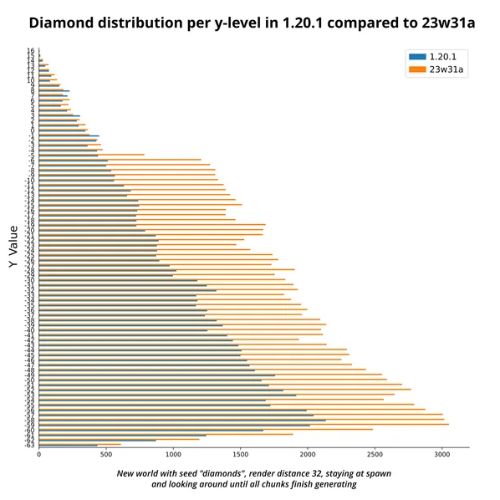
The Minecraft Diamond Level (1.21) is the Y-level where diamonds appear most often. Players choose between Y −59 for more diamond ore and Y −53 to avoid lava pools.
Y −59 gives slightly more diamonds but has more lava safety risks. Y −53 stays above most lava and is safer for branch mining. Understanding deepslate diamond layers helps players find richer diamond veins.
Diamond ore distribution & the air-exposure penalty
Diamonds appear from Y −64 to Y 16, but lower levels have more diamond ore density. The air-exposure rule stops diamonds from generating next to air, which makes some caves look empty.
Flooded areas are safe because water doesn’t count as air, so exploring aquifers can reveal hidden diamond ore distribution. Checking these areas ensures you don’t miss diamonds when caving or branch mining.
Fast, low-risk mining patterns (ranked)
Branch or strip mining works best at Y −53 or −59. Dig a 2×1 main tunnel and create side branches every two blocks. Place torches along one side to track your path.
Cave sweeping targets flooded areas. Move quickly through caves, looking for exposed ore. Night Vision and Depth Strider make this faster. Chunk-slice mining removes a 16×16 layer but needs strong tools because of deepslate hardness. Each method balances safety and speed differently.
Gear & enchants that actually move the needle
Bring at least an iron pickaxe; diamond or netherite is better. Fortune III increases diamond ore drops, while Silk Touch lets you pick up blocks safely. Efficiency V, Unbreaking, and Mending reduce time spent mining deepslate diamond ore.
Also carry a water bucket, fire resistance potion, extra food, and a shield to survive lava and mobs. The right enchanted pickaxe improves your fast diamond mining and increases diamonds per hour.
Smart safety at lava level
Mine horizontally at Y −53 to avoid underground lava pools. Always crouch and peek before stepping into voids, and turn lava into obsidian with a water bucket.
Most lava appears between Y −55 and −63. Y −53 reduces interruptions and keeps mining safe and efficient in deep caves.
Other ways to acquire diamonds (no mining required)
You can find diamonds in Minecraft structures. Trial chambers, vaults, and decorated pots may give single diamonds for crafting. Villages, especially weaponsmith and toolsmith chests, also provide diamond gear.
Rare structures like bastion remnants, end cities, stronghold altars, mineshafts, shipwrecks, jungle/desert temples, and buried treasure contain diamonds. These sources are useful if you need diamonds for early crafting, like enchantment tables, diamond armor, or armor trims.
Quick crafting & progression uses
Diamonds make diamond armor and tools, which help upgrade to Netherite. Two diamonds are needed for an enchantment table, and blocks of diamond are good for beacon bases or storage.
They also craft firework stars, jukeboxes, and armor trims, giving both practical and decorative uses. Using diamonds wisely speeds up progression and boosts diamond mining efficiency in Minecraft 1.21.
FAQ’s
What’s the exact best Y-level for diamonds in 1.21?
Y −59 has the most diamonds. Y −53 is safer against lava. Both are effective for diamond mining efficiency in Java and Bedrock.
Do biomes affect diamond ore?
No. Diamonds depend on Y-level and air-exposure rules. Biomes do not affect the number of diamonds you find.
Why do caves look “empty” of diamonds sometimes?
The air-exposure rule prevents diamonds next to air. Flooded caves can hide diamonds, as water does not block diamond generation.
Is there any reason to mine at −59 if lava is annoying?
Y −59 has slightly more diamonds, but Y −53 is safer. If lava slows progress, mining at Y −53 gives better results per hour.
What pickaxe should I bring first?
Iron pickaxe is minimum. Upgrade to diamond or netherite. Fortune III increases diamond ore drops, while Silk Touch safely stores blocks.
Does Fortune III always give 4?
No. Fortune III increases diamonds up to four per ore on average, but actual drops vary with random chance during mining.
Conclusion
The Minecraft Diamond Level (1.21): Best Y-Levels, Safety vs. Yield, Air-Exposure, and Fast Mining guide helps players mine diamonds efficiently. Choosing Y −53 reduces lava risk, while Y −59 gives maximum diamonds.
Combine branch mining, cave exploration, and chunk-slice mining with Fortune III and Silk Touch for the best yield. Explore flooded caves, aquifers, and structures to supplement diamonds. Using proper gear, safety measures, and mining strategies improves diamond mining efficiency, letting you craft armor, tools, and beacon bases faster and safer.